
Frequently Asked Questions
Have a question about One Degree Organics products? We’ve got your answers.
WHERE ARE YOUR INGREDIENTS SOURCED FROM?
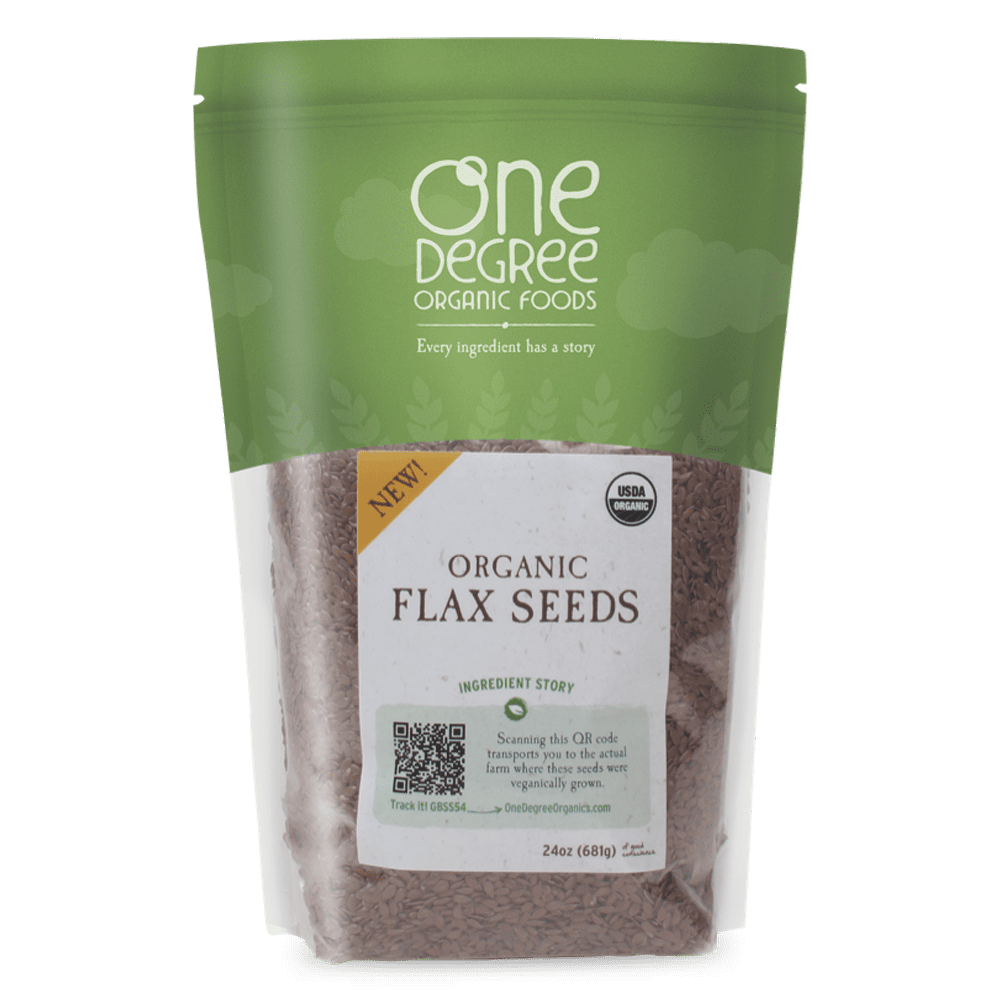
Our philosophy that there should never be more than one degree of separation between consumers and the sources of their food (hence our name, One Degree Organic Foods). We want you to know where the ingredients you’re eating come from and who grew it, just like a farmer’s market. By scanning the QR code on any of our products with your smartphone or visiting our website, you’ll find a list of ingredients and farmers for your product, plus a video of the actual farm where the grain was grown and an interview with the farmer who planted and harvested the crop.
ALL OF YOUR OATS, CEREALS, GRANOLAS, AND BREADS ARE SPROUTED (AND SO ARE MOST OF YOUR FLOURS). WHAT DOES THAT MEAN?
Sprouting is not something we came up with— it’s just a bit of genius we borrowed from Mother Nature. Sprouted grains are grains that are just entering the germination process. When a grain sprouts, enzymes in the seed activate and begin to turn stored protein, starches, and fats into more usable forms, while also breaking down antinutrients like phytic acid. Sprouting makes whole grains more nutritious and easier to digest. And they taste better, too! To learn more about why we love sprouted grains, seeds, and legumes, check out our article Sprouted Grains: The Benefits of Sprouting—Everything You Need to Know.
ARE ONE DEGREE ORGANICS PRODUCTS PEANUT AND/OR TREE NUT FREE?
Food allergens are something we take very seriously. Our manufacturing facilities have a comprehensive allergen control program to help eliminate sources of contamination and/or cross-contamination of allergens within the facility, including allergens from the supplier end, through processing to packaging and shipping of finished products.
- The following One Degree Organics products are made in a peanut and tree nut free facility
- Oats (rolled, quick and steel cut)
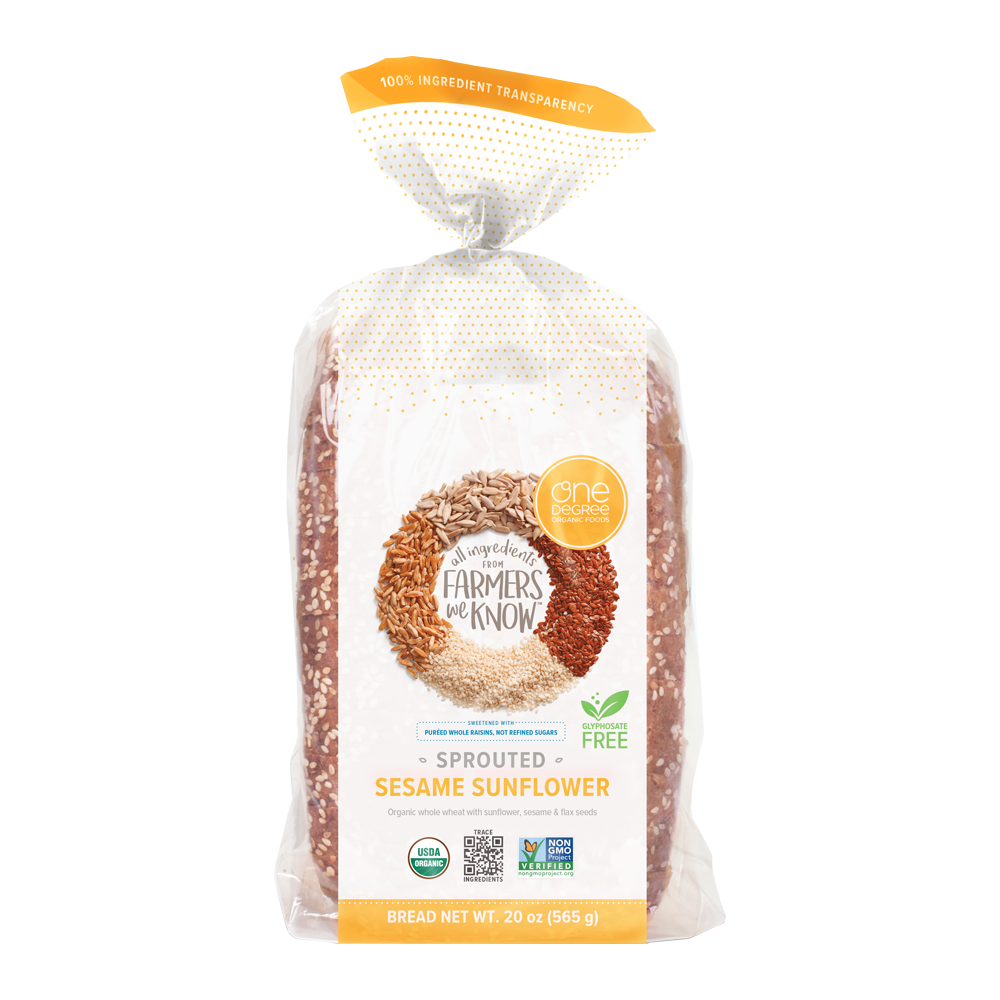
- Breads
- The following One Degree Organics products are made in a peanut-free facility that also uses tree nuts:
- Oats (instant)
- Granolas (all flavors)
- Flours (all varieties)
- One Degree Organics cereals are made in a facility that also uses tree nuts.
- Most of our products do not use tree nuts as an ingredient, but they may share packaging lines with products that do. All product contact surfaces on the packaging lines are dismantled, washed, and dried before being reassembled, and are tested for tree nut residue before further production. However, we cannot guarantee that they are tree nut-free and our packaging includes the appropriate allergen statement.
ARE ANY ONE DEGREE ORGANICS PRODUCTS GLUTEN-FREE? IF SO, WHICH ONES?
One Degree Organics offers many gluten-free products—all tested and certified gluten-free (scroll down to our FAQ on gluten-free certifications to learn more). The following One Degree Organics products are certified gluten-free:
- Oats (all sizes):
- Sprouted Rolled Oats
- Sprouted Quick Oats
- Sprouted Steel Cut Oats
- Sprouted Instant Oatmeal
- Sprouted Apple Cinnamon Instant Oatmeal
- Sprouted Cacao Nib Instant Oatmeal
- Sprouted Coconut Sugar & Spice Instant Oatmeal
- Sprouted Quinoa Hemp Instant Oatmeal
- Sprouted Protein Instant Oatmeal
- Sprouted Apple Cinnamon Instant Protein Oatmeal
- Sprouted Coconut Chia Instant Protein Oatmeal
- Sprouted Original Instant Protein Oatmeal
- Sprouted Banana Brown Sugar Instant Protein Oatmeal
-
-
- Cereal:
- Sprouted Brown Rice Crisps
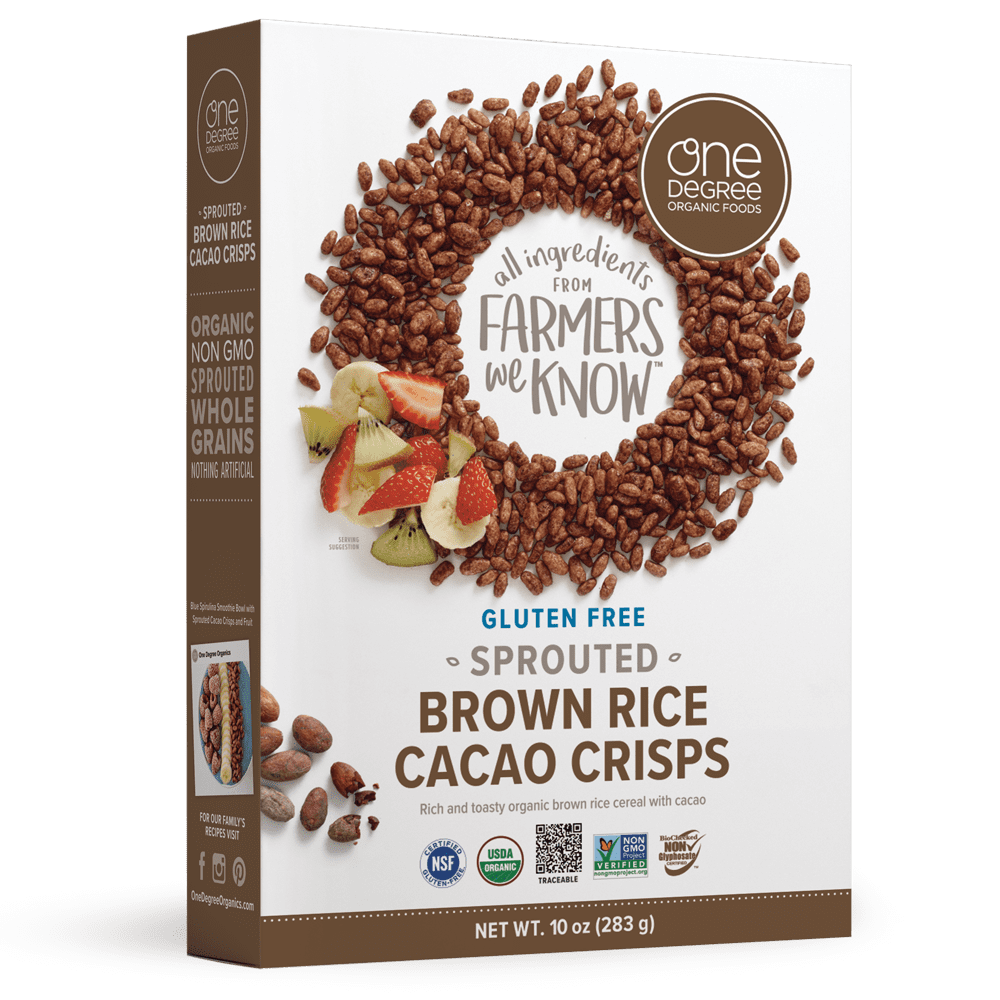
- Sprouted Brown Rice Cacao Crisps
- Sprouted Oat O’s
- Sprouted Honey O’s
- Sprouted Cacao O’s
- Sprouted Cinnamon O’s
- Granola:
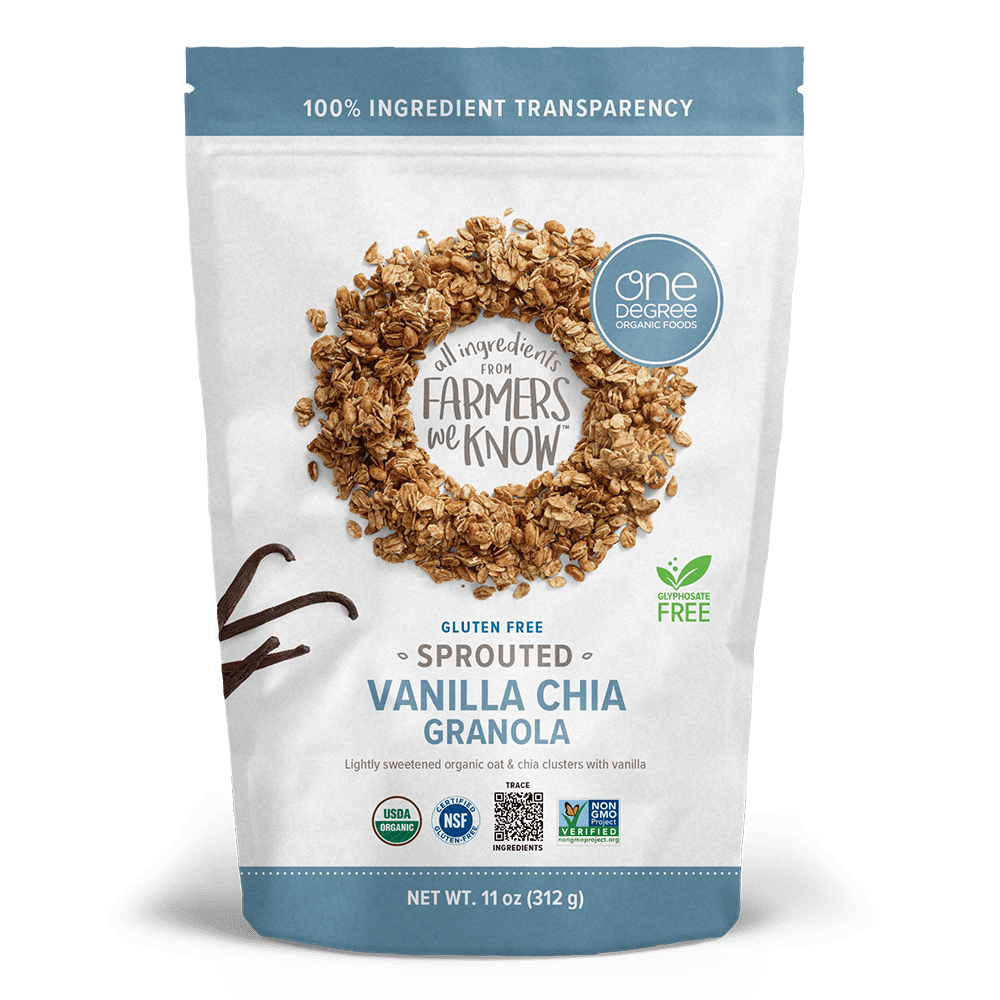
- Sprouted Vanilla Chia Granola
- Sprouted Quinoa Cacao Granola
- Sprouted Cinnamon Flax Granola
- Sprouted Honey Hemp Granola
- Sprouted Pumpkin Seed & Flax Granola
- Sprouted Classic & Supergrain Granola
- Sprouted Indulgent Granola
- Flour:
- Sprouted Brown Rice Flour
- Sprouted Oat Flour
- Cereal:
-
HOW DO YOU MAKE SURE YOUR OATS ARE GLUTEN-FREE?
Every variety of One Degree Organics Sprouted Oats—and all the granolas, cereals, and instant oatmeals we make with them—are certified gluten-free. But the process of making sure our oats are gluten-free starts well before product testing and certification. We work with farmer partners who use geographic separation from other gluten-containing crops like wheat to substantially reduce the risk of cross-contamination in the field. When the oats arrive at our facility, we use mechanical separation to sort long-grain oats from shorter wheat or barley grains. Then we test both the separated grains and the final product to make sure they meet the international standard of less than 20 ppm of gluten. (See the Testing and Certifications section of our FAQ below for more detail).
WHAT KIND OF GLUTEN-FREE TESTING DO YOU DO?
We take food safety and food allergens very seriously. To that end, we have defined a set of testing protocols for our gluten-free products. Rigorous testing of machinery, individual ingredients and the final product are conducted throughout the production process to ensure our foods comply with government regulations of less than 20 ppm gluten.
WHO CERTIFIES YOUR GLUTEN-FREE PRODUCTS / WHICH GLUTEN-FREE CERTIFICATIONS DO YOU USE?
Depending on the product and the country in which it is sold, One Degree Organics products are certified gluten-free by Gluten-free Certification Program (GFCP includes the green Beyond Celiac logo and the blue Canadian Celiac Association logo), NSF, or the Gluten-free Certification Organization (GFCO by the Gluten Intolerance Group). By country and by product, here are the gluten-free certifications for One Degree Organics:
- US:
- Oats: GFCP Beyond Celiac
- Cereal: NSF
- Granola: GFCO
- Flour (sprouted brown rice flour only): GFCP Beyond Celiac
- Canada:
- Oats: GFCP Canadian Celiac Association
- Cereal: NSF
- Granola: GFCO
- Flour (sprouted brown rice and oat flour only): GFCP Canadian Celiac Association
ARE ONE DEGREE ORGANIC PRODUCTS GLYPHOSATE FREE?
Glyphosate cannot be used on certified organic crops, so none of our organic farmer partners use glyphosate to farm the ingredients they grow for us. However, glyphosate can drift from other farms and contaminate groundwater as well. To ensure our products are glyphosate free, we have them third-party tested and BioChecked Non-Glyphosate Certified. You’ll find their logo on our packaging, as well as our own glyphosate free icon.
WHICH ORGANIC CERTIFICATIONS DO YOU USE?
Depending on the product and country in which it is sold, all One Degree Organics products are certified organic by USDA Organic, Canada Organic, or Quality Assurance International.
ARE ONE DEGREE ORGANIC PRODUCTS NON-GMO?
In addition to being certified organic, all One Degree Organics products are Non-GMO Project Verified.
ARE ALL ONE DEGREE ORGANICS PRODUCTS PLANT-BASED AND VEGAN?
All One Degree Organics products are plant-based. Most are certified vegan, except for the following products made with ethical organic honey:
- Sprouted Oat Honey O’s Cereal
- Sprouted Oat Honey Hemp Granola
In addition to using plant-based ingredients, we ensure all our organic ingredients are grown using organic plant-based methods. All our farmer partners are held to the highest standards of plant-based cultivation and grow crops without the use of chemicals, compounds or animal inputs. One of the key tenets of this high level of agriculture is to reject animal-based fertilizer. The reason for this is to keep pathogens and contaminants away from crops. Our farms use only plant-based fertilizers and favor nature’s own time-tested methods to build nutrients in the soil, such as rotating crop varieties and allowing fields to lie fallow. As a result, they produce healthier, safer food.
Check out our Organic Principles article to learn more about plant-based organic farming.
WHAT’S THE DIFFERENCE BETWEEN QUICK, ROLLED, AND STEEL CUT OATS?
Each of these hot cereal types refer to how much the oat groat has been processed and each has its own unique texture and cook time. Quick oats are more finely cut, have a creamy texture, and cook fast for easy breakfasts. Rolled oats are less processed, have a rich taste, and make great additions to recipes (think breading for dinner or cookies for baking). Lastly, steel cut oats are the least processed, have a chewier texture, and add a more robust flavour to your recipes. Nutritionally, they are all the same.
Check out these blog posts about our wonderful oats:
I THREW OUT THE BAG. WHAT ARE THE COOKING DIRECTIONS FOR SPROUTED ROLLED OATS?
We’ve added the cooking directions to our Recipes page for your convenience. You can find it at this link: https://onedegreeorganics.com/recipe/sprouted-rolled-oats-directions/
THIS CEREAL BOX DOESN’T SEEM VERY FULL. HOW COME?
Cereals are sold by weight, not volume, so you can count on there being the same amount of cereal in there as when we packed it. Almost all cereals settle within their packaging — just how much is related to the shape and density of the particular crisps. Either way, they’re still mighty tasty.
WHAT IS THE SHELF LIFE OF YOUR FLOUR?
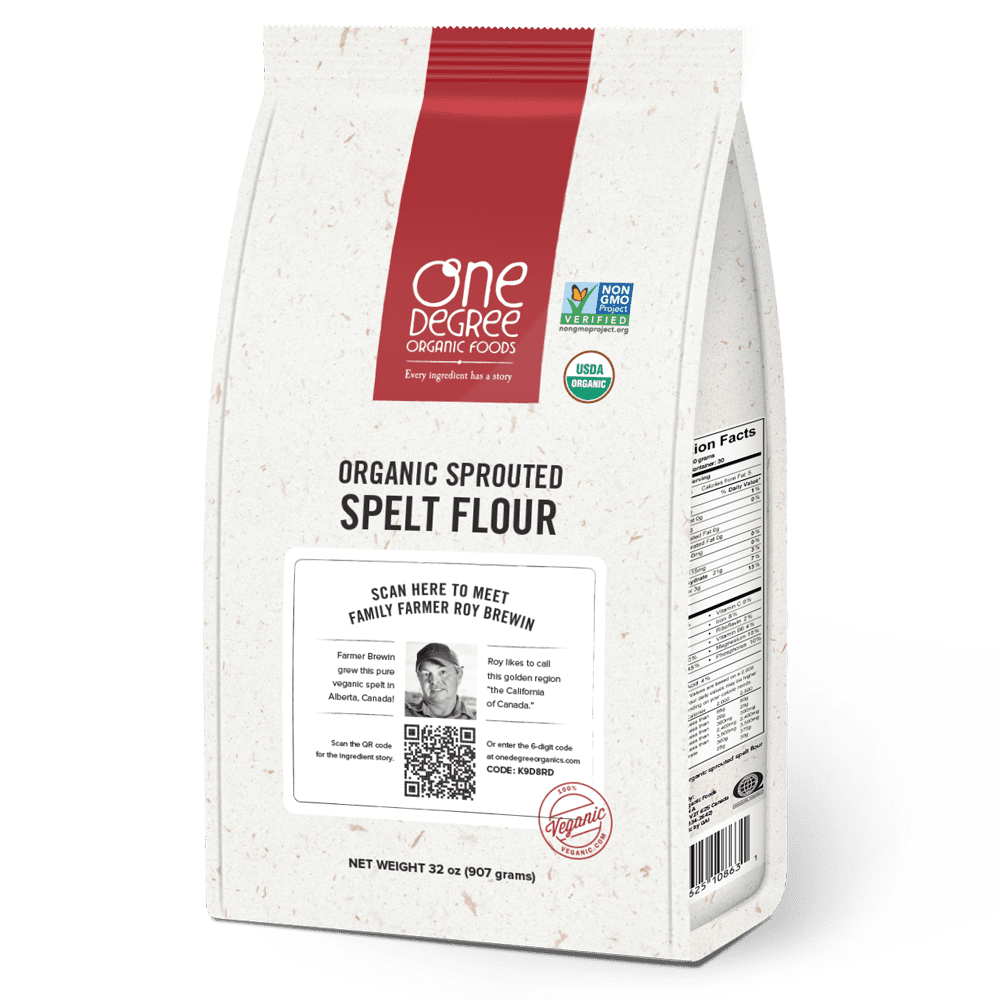
Our sprouted flours are best stored in an airtight container and kept in a cool, dry place. They have a shelf life of up to 1 year. Refrigerating or freezing the flour will keep it fresh longer, especially if you live in a humid climate.
WHY ARE ONE DEGREE ORGANICS’ FLOURS SPROUTED? CAN I USE THEM LIKE REGULAR FLOUR?
Sprouting brings out the best in whole grains, making them more nutritious and easier to digest. You can use our sprouted flours anywhere you use whole grain flours in your favorite recipes. To learn more about sprouted flour, check out these two articles:
The Benefits of Sprouted Flour: How to Use Sprouted Flour—and Why!
Sprouted Flour FAQs: Questions & Answers About Sprouted Flour
WHERE CAN I BUY ONE DEGREE ORGANICS PRODUCTS?
Please feel free to check out the store locator on our website to see which stores near you carry our products. Enter your zip code and choose the products you want to search for and it will populate a list of all the stores that carry the product for which you are searching, and even show on a map where they are located.
I CAN’T FIND ONE DEGREE ORGANIC PRODUCTS IN MY AREA. WHERE CAN I GET THEM?
If you want some delicious One Degree Organic Foods products in your area, we would love to work on getting them there for you. Every time we receive a request for product, we share this information with our sales team so they can work on getting them there for you. To help speed up the process, please email customerservice@onedegreeorganics.com and we will send back a product information sheet that you can drop off at any of your local stores and request they order in our favorite One Degree foods.
CAN I BUY YOUR PRODUCTS ONLINE?
CAN I BUY YOUR PRODUCTS IN BULK?
Our products are available through some of our distributors. If you’re interested in being connected with them, please email customerservice@onedegreeorganics.com and we will put you in touch with our sales team.
MY FAVORITE PRODUCT HAS BEEN DISCONTINUED. HOW COME?
This is typically due to a decline in sales. The good news is, we have many amazing sprouted, organic, and non-GMO products for you to enjoy.
I NOTICED A RECIPE CHANGE IN ONE OF MY FAVORITE PRODUCTS. WHY?
We always go above and beyond to make sure that we put the very best ingredients in our products. If we make a change to a recipe, it means we have found a different supplier or similar ingredient that allows us to keep delivering this tasty food in our product line for the long haul.
SOMETHING SEEMS OFF WITH MY PRODUCT. WHAT DO I DO?
We are committed to making healthy, high-quality food and take the quality of our products very seriously. If you are unsatisfied with your product, please reach out to our customer service department customerservice@onedegreeorganics.com and we will happily work with you to fix the issue.
I’M A FARMER MYSELF. HOW CAN I TALK WITH SOMEONE ABOUT USING MY FOOD?
If you are organically farming, using plant-based cultivation methods and you think we could benefit from using your product, please email customerservice@onedegreeorganics.com.
DOES ONE DEGREE ORGANICS TEST THEIR PRODUCTS FOR HEAVY METALS?
Arsenic, lead, mercury, and cadmium are heavy metals of concern to human health. Because they are elements that occur widely in naturally-occurring deposits in the Earth’s crust—and thus in soil and water—they can accumulate in the food supply through plants and other foods people eat.
While both US FDA and Health Canada have established maximum allowable limits for heavy metals in drinking water, there are no set limits on arsenic, lead, mercury, or cadmium in food in either the United States or Canada. At One Degree Organics, we test all our products for heavy metals to ensure every product is safe for you and your family to enjoy. Through our commitment to 100% traceability, you can meet the farmers behind every ingredient that makes it to your table.
Is Your Packaging Recyclable?
Our paper / carton-based packaging (cereal boxes, instant oatmeal boxes and sachets) are recyclable. In terms of our pouches, these may be recyclable depending on local recycling capabilities. We are focused on providing real, high-quality ingredients and products without the use of preservatives. Maintaining freshness and product integrity is critically important to us, and this requires the use of multi-layer materials. These materials help extend shelf life, but can make recycling the pouches more complex. While not all of our packaging is currently recyclable, this is an area we are actively evaluating as we work toward solutions that balance food safety, quality, and environmental impact.
Can't find an answer?
If you’ve read through our FAQs above and are still scratching your head, submit your question below.